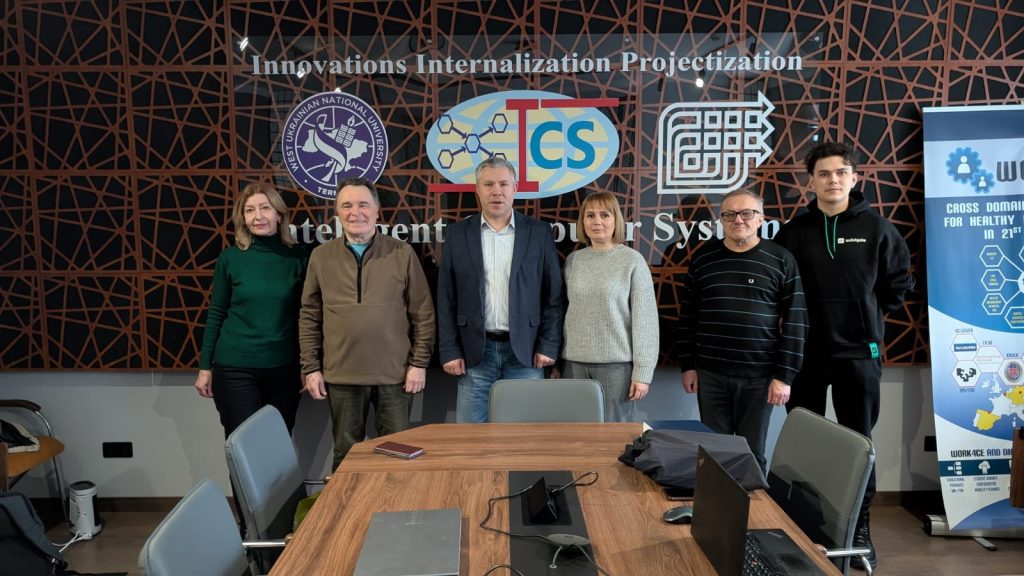
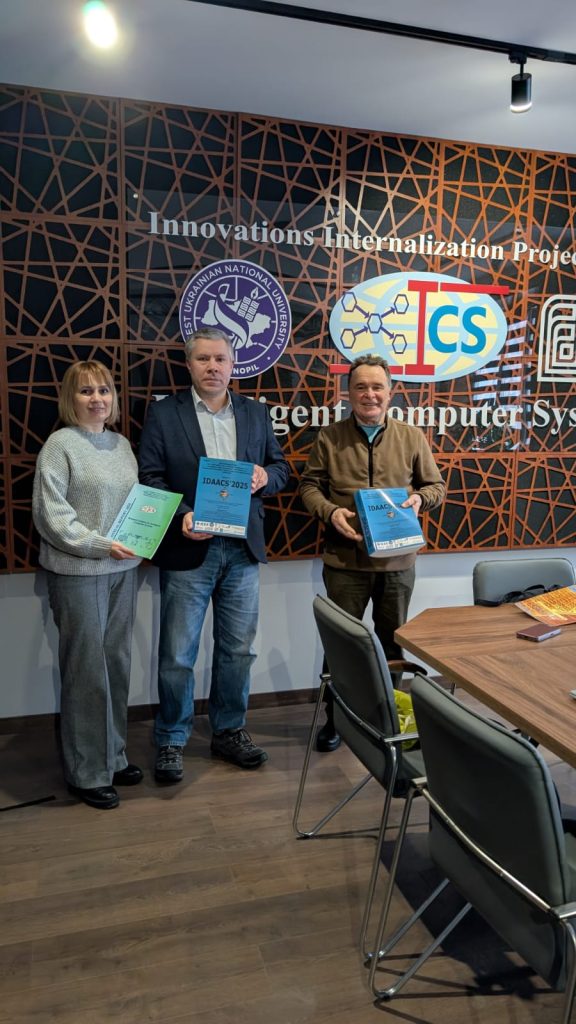
On February 25, 2026, the Research Institute for Intelligent Computer Systems hosted a meeting with investor and founder of MagneticOne Group, Ruslan Savchyshyn. The discussion focused on emerging business opportunities in data migration and innovative infrastructure management solutions developed by the company.
During his talk, Ruslan Savchyshyn emphasized that data migration represents a large and sustainable market driven by the continuous obsolescence of information systems. Organizations across domains such as e-commerce, CRM, and CMS regularly face the need to modernize legacy systems while preserving valuable data and knowledge.
Data migration is not merely a technical process of transferring information from one system to another. It requires intellectual analysis, data transformation, and deep understanding of structures and formats. Even global corporations build significant parts of their business around maintaining and modernizing legacy systems.
Special attention was given to the academic dimension of this topic. Data migration can serve as a foundation for laboratory work, bachelor’s and master’s theses, and research projects. Students can combine practical implementation with analytical depth, increasing both the scientific value and commercial potential of their work. While artificial intelligence tools can assist in automation, human expertise remains critical for ensuring quality and accuracy.
Ruslan Savchyshyn also highlighted the long-term relevance of this sector. As technologies evolve, systems and formats inevitably become outdated. Converting legacy data into modern digital formats is essential for preserving organizational memory and human knowledge. This creates sustainable opportunities for startups and research-based businesses.
The second part of the meeting focused on one of the key projects developed by MagneticOne Group — an integrated digital infrastructure map.
The solution combines vector-based geospatial data with a geographic visualization layer based on Google Maps. The system allows operators to clearly see buildings, power cables, gas pipelines, and heating networks within a unified digital environment. Networks are visualized using different colors and thicknesses, providing intuitive understanding of their structure and condition.
The digital map supports infrastructure management throughout its entire lifecycle, which may extend up to 100 years. It ensures knowledge preservation despite staff turnover, organizational changes, or structural reforms. In emergency situations, such as cable damage, the system enables faster localization of problems, significantly reducing repair time and costs.
Another important aspect discussed was technical debt accumulated due to inconsistent standards across organizations managing different networks. The digital map facilitates the implementation of unified data standards and improves interoperability. Technically, the system operates as a geo-information database with SQL query support, enabling integration of multiple datasets and scalable development.
The meeting concluded with discussions on potential cooperation between the Research Institute and MagneticOne Group. Students were encouraged to explore data migration as a topic for research and startup initiatives, while educators were invited to support the integration of practical data transformation tasks into academic programs.
The Research Institute for Intelligent Computer Systems expresses its gratitude to Ruslan Savchyshyn for the insightful presentation and valuable discussion on bridging science, business, and long-term digital innovation.